
A side‑by‑side guide with a worked example — Palazzo Construction
Palazzo Construction Ltd. • Vancouver & Lower Mainland • September 2025
Choosing between **Cost‑Plus (%)** and **Lump Sum** affects cash flow, decision speed, and how risk is priced. This guide summarizes differences we see on Vancouver renovations and provides an illustrative calculation. Always confirm legal terms with counsel and align payment timing with the BC Builders Lien Act holdback rules.
Quick Comparison
| Dimension | Cost‑Plus (%) | Lump Sum |
| How you pay | Actual cost of work + agreed fee (e.g., 10–20%). Open‑book invoices with backups. | Fixed price for defined scope. Progress draws against a schedule of values. |
| Price certainty | Moderate — varies with scope changes and discoveries. | Higher — if drawings/specs are complete. Unknowns appear as Change Orders. |
| Scope changes mid‑stream | Easy — just approve and track; fee applies to changes as well. | Slower — formal Change Orders; may affect price and schedule. |
| Transparency | High — you see supplier and trade invoices. | Moderate — you see draw breakdowns; less invoice‑level detail. |
| Best when | Scope is evolving or site conditions are uncertain; collaborative team. | Scope is well‑defined; competitive bid environment; owner wants price cap. |
Worked Example (Illustrative Numbers)
Base estimate (direct costs): **$170,000**. Contractor fee on Cost‑Plus: **15%**. Lump Sum bid (includes contractor risk/contingency): **$180,000**.
Scenario A — No overrun:
- Cost‑Plus: $170,000 × 1.15 = **$195,500**
- Lump Sum: **$180,000**
Scenario B — 10% overrun of direct costs:
- Cost‑Plus: ($170,000 × 1.10) × 1.15 = **$215,050**
- Lump Sum: first ~5% absorbed in contingency; remaining 5% as Change Orders → **≈$189,000** (illustrative)
Result: Lump Sum is cheaper at low overruns; Cost‑Plus becomes competitive when scope reduces or when owner values flexibility/speed.
Visuals (High‑DPI)
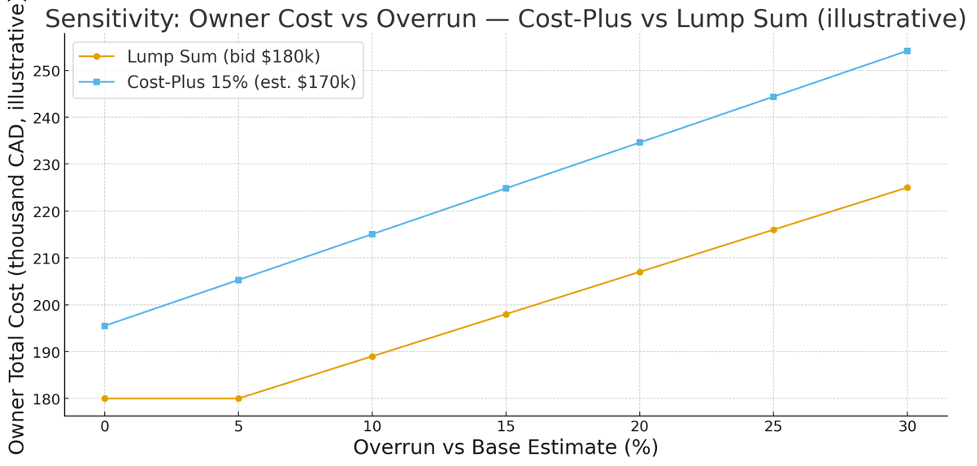
Sensitivity of owner total cost vs overrun percentage (illustrative).
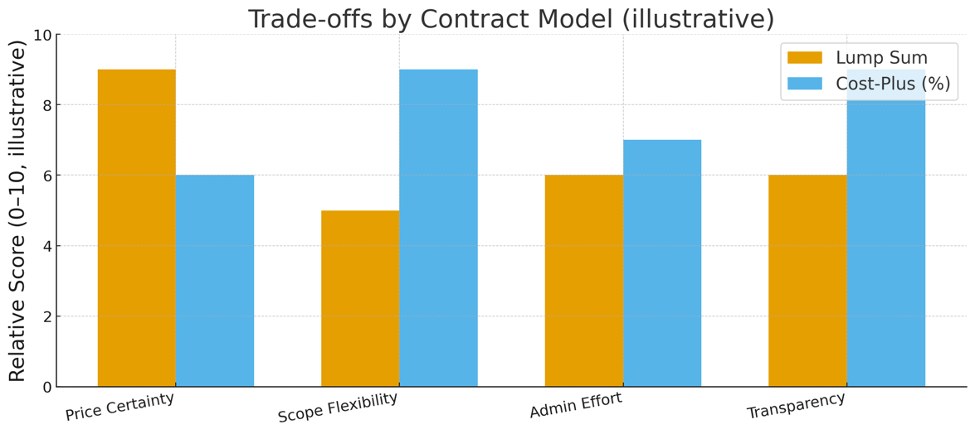
Trade‑offs by model: price certainty vs flexibility, transparency and admin effort (illustrative).
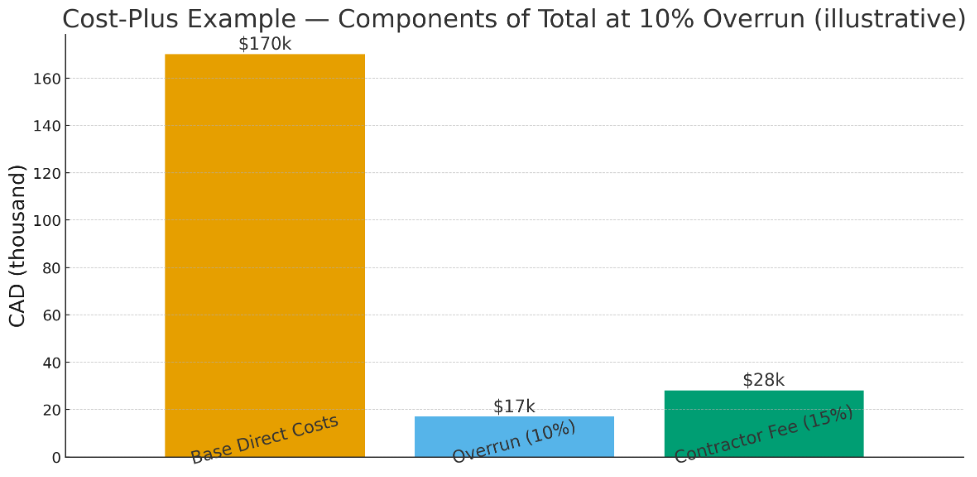
Cost‑Plus example — components of total cost at 10% overrun (illustrative).
Palazzo Tips
- Define allowances (appliances, fixtures, tile) and a process to update them in writing.
- In Cost‑Plus, set a **target price** and a reporting cadence (weekly burn‑rate + forecast to complete).
- In Lump Sum, include unit rates for foreseeable unknowns (e.g., rot repairs) to avoid pricing delays.
- Track Change Orders with approvals before work proceeds; align on markup policy (fee on changes).
- Keep lien releases and inspection passes organized for draws and occupancy.
References (APA 7th)
Canadian Construction Documents Committee (CCDC). (2023). CCDC‑2 (Stipulated Price), CCDC‑3 (Cost‑Plus) and related guides. https://www.ccdc.org/
Province of British Columbia. (2024). Builders Lien Act — holdback and payment concepts. https://www2.gov.bc.ca/
Canadian Construction Association (CCA). (2023). Project delivery and pricing models overview. https://www.cca-acc.com/
BC Housing. (2024). Home construction contracts — homeowner guidance. https://www.bchousing.org/
Copyright & Editorial Integrity
Original writing and charts created for Palazzo Construction. Figures use illustrative numbers; confirm contract terms with your counsel. © Palazzo Construction Ltd. All rights reserved.
Palazzo Construction Ltd. • Vancouver & Lower Mainland • September 2025
One Response
https://shorturl.fm/SdMHA