A List‑Style Guide for Vancouver Homes — Palazzo Construction
Palazzo Construction Ltd. • Vancouver & Lower Mainland • September 2025
Coastal humidity, salt‑mist, and temperature swings punish cabinets. 2025 trends pair luxury finishes with robust substrates and hardware that survive this environment. Below we outline the most requested looks and the construction details that keep them looking new. Compliance with formaldehyde emissions rules (TSCA Title VI/CARB) and cabinet performance standards (KCMA A161.1) is assumed in Palazzo specifications (U.S. EPA, 2016; KCMA, 2021).
Top 10 Cabinet Trends for 2025 (Coastal‑Ready)
- Ultra‑Matte, Low‑Sheen Finishes — fingerprint‑resistant, soft‑touch laminates and matte lacquers reduce glare and show fewer water marks.
- Textured Woodgrains — rift‑cut oak and ash veneers with wire‑brushed texture for depth; sealed with UV‑cured finishes.
- Sintered Stone / Porcelain Fronts — thin porcelain/sintered panels on aluminum frames for extreme scratch and moisture resistance.
- Marine‑Grade Plywood Boxes — superior fastener hold and moisture tolerance versus standard particleboard.
- Moisture‑Resistant MDF (HDF) for Doors — stable, smooth paint‑grade surfaces with MR resins for coastal conditions.
- Anodized Aluminum Accents — rail doors, open shelves, and frames that won’t rust; pairs with glass.
- PVD Hardware in Warm Metals — salt‑spray‑resistant finishes (brushed brass, champagne, graphite).
- Integrated Lighting — low‑glare LEDs: toe‑kick night lights, under‑cabinet task, in‑cabinet sensors.
- Concealed, Soft‑Close Hinges/Slides — premium hardware with 70k–80k cycle life and 6‑way adjustability.
- Earthy Coastal Palette — salt‑spray white, driftwood taupe, deep navy, and sea‑glass green with matte black contrasts.
Material Comparison (Coastal Performance, Illustrative)
| Material | Moisture | Durability | Cost | Notes |
| Marine Plywood (birch) | High | High | $$$ | Best for boxes; excellent fastener hold. |
| MR MDF/HDF | Med‑High | High (paint‑grade) | $$ | Smooth doors; seal all edges. |
| Particleboard (std.) | Low | Med‑Low | $ | Budget only; prone to swelling. |
| Sintered Stone Fronts | High | Very High | $$$$ | Scratch/UV resistant; aluminum frame. |
| Textured Laminate (HPL/TFL) | Med‑High | High | $$ | Stable and easy to maintain. |
Visuals & Diagrams
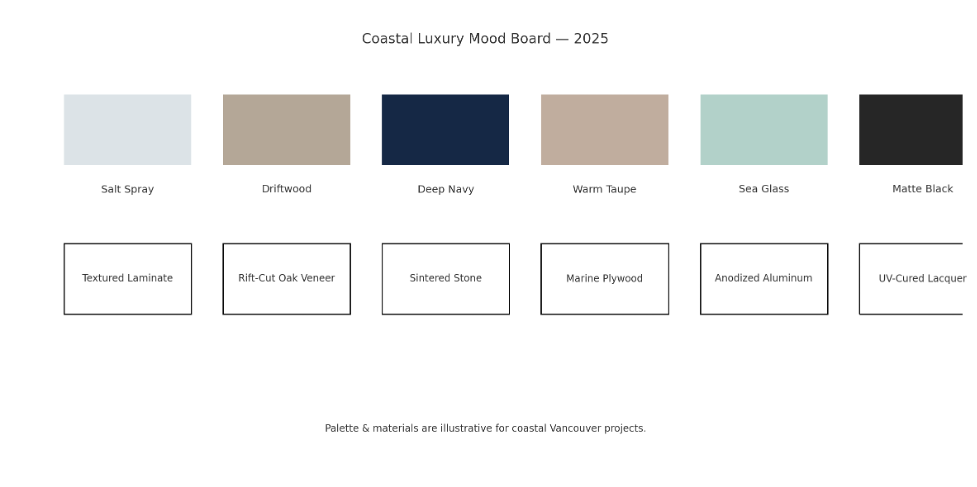
Coastal‑inspired mood board: full palette and materials (illustrative).
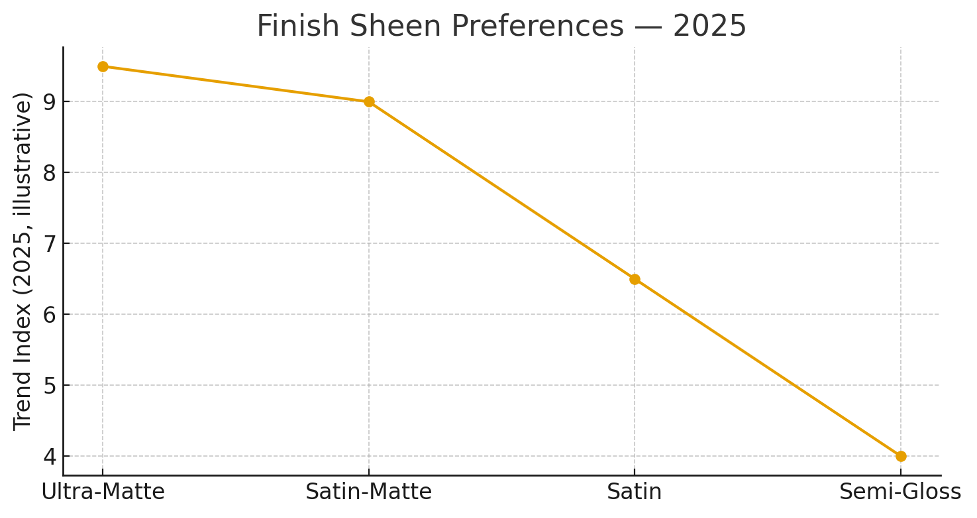
Finish sheen preferences trending to ultra‑matte in 2025 (illustrative).
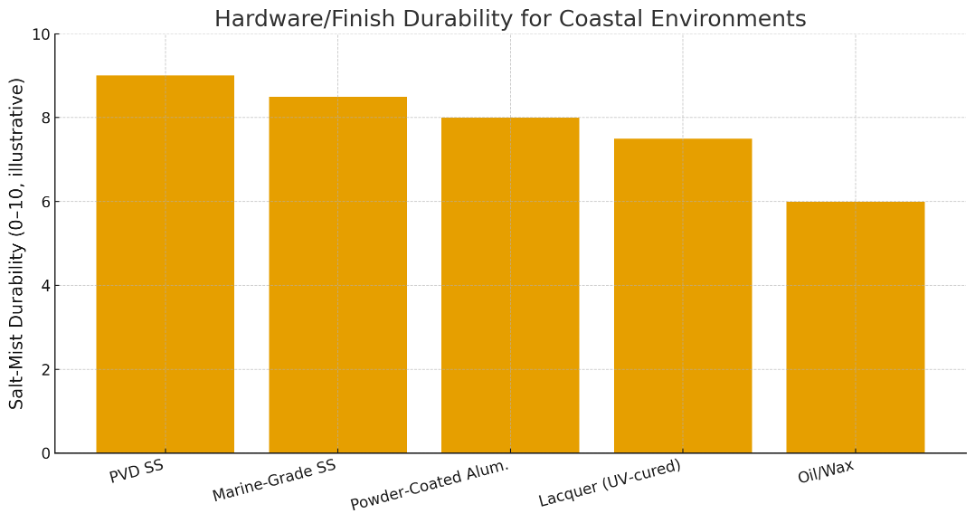
Updated: Hardware/finish durability — legible fonts (illustrative).
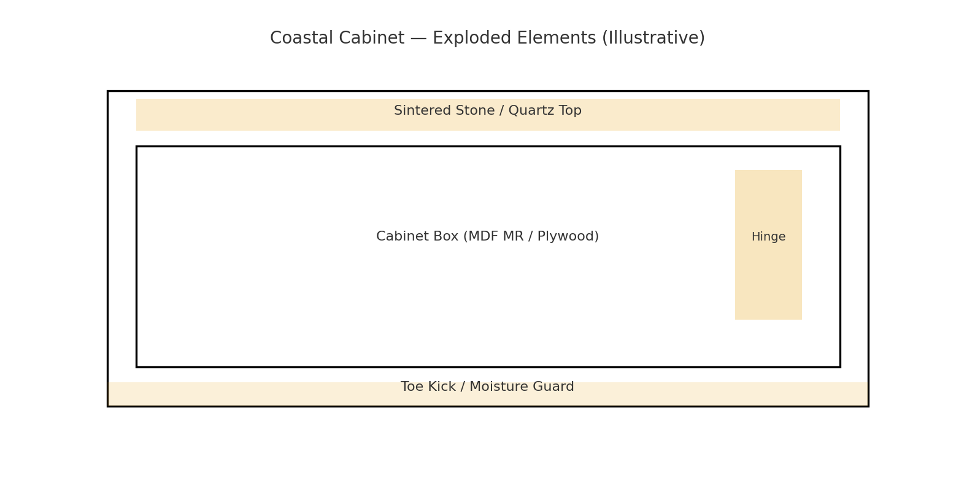
Exploded cabinet diagram: substrates, top, hinges, and moisture guards (illustrative).
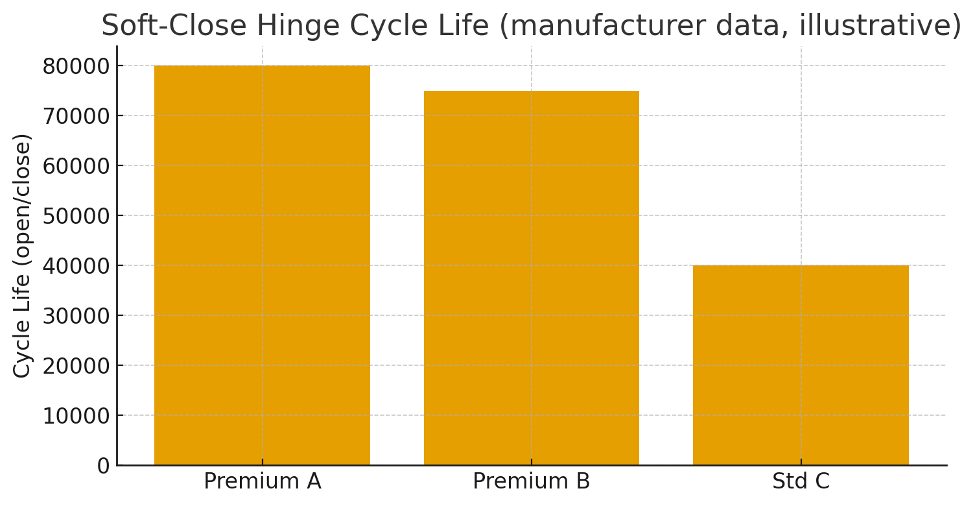
Soft‑close hinge cycle life comparison (illustrative manufacturer data).
References (APA 7th)
Kitchen Cabinet Manufacturers Association. (2021). ANSI/KCMA A161.1 – Performance and construction standard for kitchen and vanity cabinets. https://kcma.org/
U.S. Environmental Protection Agency. (2016). Formaldehyde emission standards for composite wood products (TSCA Title VI). https://www.epa.gov/formaldehyde/tsca-title-vi
Province of British Columbia. (2024). BC Building Code 2024 — Moisture management (general guidance). https://www2.gov.bc.ca/
Canadian Wood Council. (2023). Wood design and moisture in buildings — Best practices. https://cwc.ca/
Copyright & Editorial Integrity
This article and visuals were created exclusively for Palazzo Construction. Facts are paraphrased from official/industry sources cited above; no verbatim copying. © Palazzo Construction Ltd. All rights reserved.
Palazzo Construction Ltd. • Vancouver & Lower Mainland • September 2025